
How The Shift Healing and Wellness Supports Your Recovery
If you or someone you love has gone through treatment for Lyme disease, you already know that the diagnosis is only the beginning of the story. Getting the infection under control is one battle. Getting your body, your energy, and your nervous system back is often a much longer road, and it’s a road a lot of people end up walking alone.
We see this often at The Shift Healing and Wellness. Our clinic sits right next door to Envita Medical Center here in Scottsdale Az, and over the years we’ve had the privilege of supporting many of their patients as they move through and beyond Lyme treatment. We’re not part of Envita and we don’t replace the work their medical team is doing. We offer treatments that supports your doctors protocol. Supporting your immune system, helping with detox, managing Herxing symptoms, calming ones nervous system. Patients have said we are the place they come to help their body recover from what chronic illness takes from it.
“I had a lot of jaw and neck pain from clenching all the time and not sleeping and Celeste was so gifted at figuring out how to relieve that pain. She was helping me also with muscle stiffness and soreness. And gave me a lot more mobility and ability to keep going.” Jordan P, a Lyme disease patient at the Shift Healing and Wellness.
What Is Lyme Disease, Really?
Lyme disease is caused by Borrelia burgdorferi, a bacteria spread through the bite of an infected blacklegged tick. The CDC estimates that about 476,000 people are diagnosed and treated for Lyme disease each year in the United States, though only around 89,000 confirmed cases are formally reported to health departments annually. That gap says a lot about how often Lyme goes undiagnosed, misdiagnosed, or caught later than it should be.
Arizona isn’t tick country in the way the Northeast or Upper Midwest is. Only 16 Lyme disease cases were documented among Arizona residents in 2023, and every one of them was travel-related, meaning the exposure happened somewhere else before the person came home or came here for care. Patients travel from all over the country, and parts of the world, to work with specialists like the team at Envita.
When caught early Doctors may recommend a course of antibiotics to clear the infection. More often it seems a significant number of patients go undiagnosed for years. Symptoms begin, and with time become unbearable. Going undiagnosed for years after the initial onset of infection, for months or more often years, creating a chronic disease process. Post-Treatment Lyme Disease Syndrome (PTLDS), doctors are still working to fully understand why it happens to some patients and not others.
What we hear most often from clients navigating this is a familiar list: bone-deep fatigue that doesn’t respond to rest, jaw pain and tension, gut issues that seem to have no clear trigger, brain fog, and a nervous system that feels like it’s stuck in overdrive. If any of that sounds familiar, you’re not imagining it, and you’re not alone in it.
What Is Herxing? Understanding the Herxheimer Reaction
If you’re in active Lyme treatment, there’s a good chance you’ve either experienced this already or heard other patients talk about it: herxing.
Herxing (short for a Jarisch-Herxheimer reaction, or “Herxheimer reaction”) is a temporary flare of flu-like symptoms that can happen after starting antibiotic or other Lyme-targeted treatment. It happens when treatment kills off Borrelia bacteria faster than the body can clear the debris left behind. That sudden release of bacterial components can trigger an immune system response and a burst of inflammation, which is what makes patients feel worse before they feel better.
Common herx symptoms include fever, chills, body aches, headache, fatigue, and a general flu-like feeling. For some patients it resolves within a day. For others, especially in more complex or long-standing chronic Lyme cases, it can come in waves over several days to a week or more as treatment progresses. Every patient’s timeline looks a little different, and this is something to track closely with your treating physician and find ways to manage it on your own.
We bring this up because it matters for post treatment planning. The Shift Healing and Wellness, has worked with Lyme Patients undergoing treatment for close to 10 years now. We understand that when you’re herxing, your medical team should always be your first call. What we can offer during these harder stretches of treatment is a gentle, supportive space: work that’s aimed at calming an overtaxed nervous system and easing physical tensions from intense detoxing, lack of sleep. Joint pain, nausea, gut issues.
How We Support Lyme Recovery at The Shift Healing and Wellness
Everything we do is meant to work alongside your treating physicians, never instead of them. Here’s how a few of our modalities may support the body during Lyme recovery.
Red Light Therapy Red and near-infrared light has been studied for its potential to support cellular energy production (ATP) and calm inflammation at the tissue level. For clients dealing with the exhaustion and body-wide inflammation that can follow Lyme treatment, red light therapy may help support the body’s natural recovery process. We often pair red light therapy with EWOT (Exercise With Oxygen Therapy) for clients who are able to do light movement, studies suggest it may help support oxygen delivery, transport and retention throughout the body.
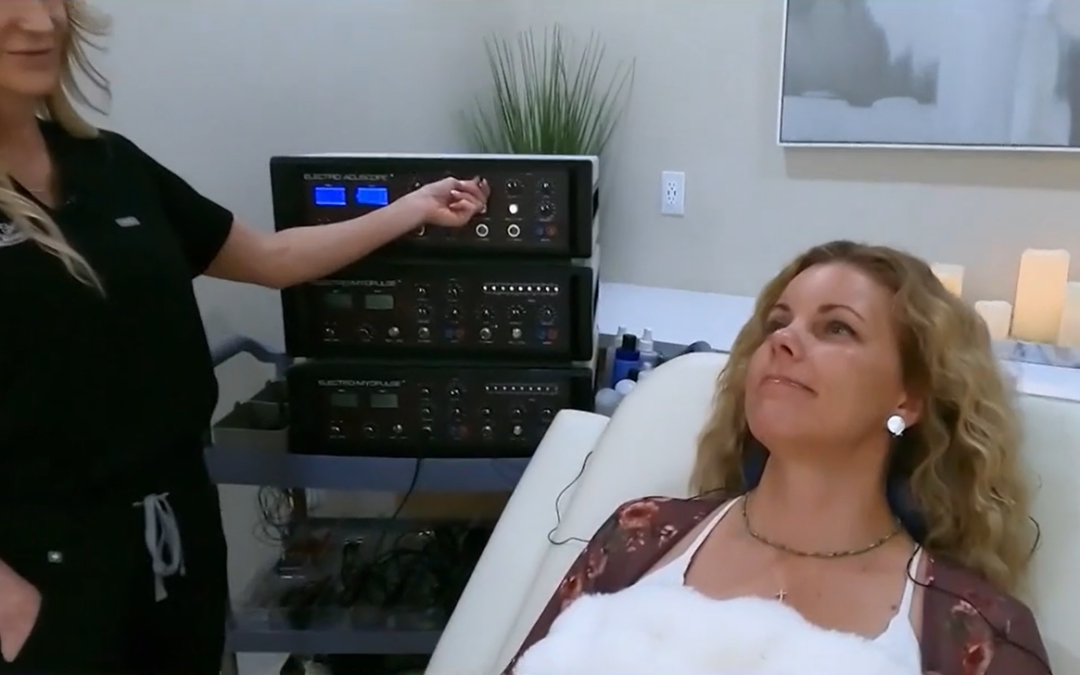
**Acuscope and Myopulse The Acuscope and Myopulse are microcurrent devices that work with the body’s own electrical signaling to help address nervous system dysregulation and localized pain. This is often where we see the most meaningful shifts for our Lyme clients, particularly around joint pain and lack of energy, jaw tension and TMJ-type pain. Because the the Acuscope devices work directly with the nervous system, clients report that sessions leave them feeling calmer, more focused and with reduced pain.
Frequently Asked Questions
What is Post-Treatment Lyme Disease Syndrome (PTLDS)? PTLDS is the term used when fatigue, body aches, or cognitive symptoms persist after a standard course of Lyme treatment is complete. Researchers are still studying why this happens in some patients and not others, and extended antibiotic use hasn’t been shown to resolve it. This is a conversation to have directly with your physician.
What does it mean to “herx,” and is it dangerous? Herxing refers to a Jarisch-Herxheimer reaction, a temporary worsening of symptoms that can happen when Lyme treatment kills bacteria faster than the body can clear the resulting debris. It’s generally not dangerous, but it can feel intense. Always keep your treating physician looped in on what you’re experiencing.
Can wellness sessions like red light therapy or acuscope treat Lyme disease?
No, that is not a claim we would make. However, while modalities like red light therapy, acuscope, myopulse, and EWOT are not a treatment or cure for Lyme disease, they support the body with self-healing and nervous system regulation, allowing the body to utilize its natural ability to fight off infection and strengthen one’s own immune system.
If I have Lyme when is it recommended to start these supportive sessions?
Because each person’s plan of care depends on where they are in treatment and what their physician recommends, we always start with a conversation about current symptoms, your treatment timeline, and what your medical team has advised. From there, we build a plan of care around you.
You Don’t Have to Figure This Out Alone
Lyme recovery unfortunately isn’t linear, and it isn’t something you should have to manage by yourself. If you’re a patient undergoing treatment currently and you’re dealing with fatigue, joint pain, gut issues, or nervous system dysregulation that can follow Lyme treatment, we’d love to talk with you about how The Shift Healing and Wellness could be part of your recovery plan alongside your medical care.
Book a FREE Consultation today.